

There's a particular feeling every DIYer knows. You step back, admire a neat repair, give yourself a quiet nod – and then return three weeks later to find it's split, blackened, peeling or just sitting there looking at you like a disappointed parent. The instinct is to blame the product. Wrong brand. Bad batch. Cheap stuff. But here's the thing about repair materials: they don't fail randomly. Each one fails in its own very specific way, and that pattern is a message. Learn to read it and the wall becomes its own diagnosis.
Filler and the Star That Shouldn't Be There
That starburst crack – lines radiating out from the centre of your repair like a tiny explosion – is one of the most common sights in British homes and almost nobody knows what caused it. It looks dramatic, as though the filler fought hard and lost. What actually happened is much more mundane: it dried too fast, or you put too much on in one go.
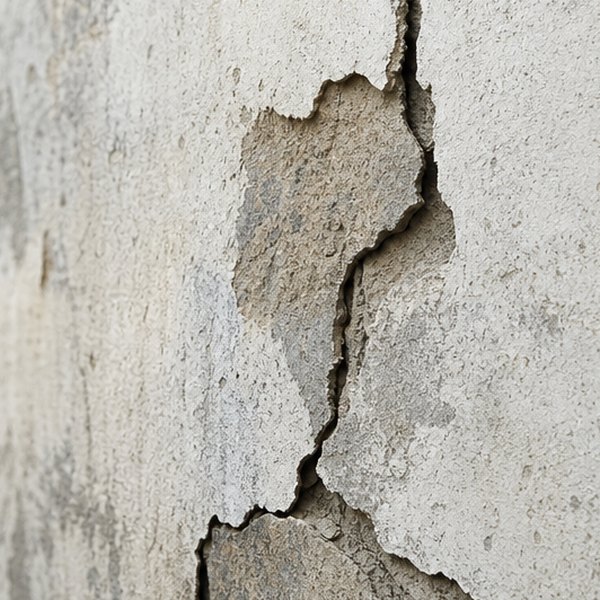
Filler shrinks as it cures. A thin layer shrinks a little and bonds before the stress builds up. A thick application shrinks a lot – and because the outside dries first while the inside is still soft, the surface gets pulled apart from within. The star is the map of that internal tug-of-war. Cold draughts or direct sun on a fresh repair make it worse, essentially rushing the outside while the inside hasn't caught up.
The fix isn't a better filler. It's two thin coats with a dry hour between them. Dull advice, but the wall already knew that before you did.
Grout and the Blackening That Isn't What You Think
Grout goes black and the assumption is that it's old, tired, and needs replacing. In most bathrooms, that's completely wrong. The blackening is mould, and mould isn't interested in old grout – it's interested in damp air with nowhere to go.
What's telling here is *where* the grout goes black first. If it's the lower corners of the shower, the grout is sitting in standing water after each use – the seal between tiles and tray has probably gone, and water is wicking in from underneath. If it's evenly across the whole surface, the room just doesn't breathe. The grout itself is almost beside the point.
Replacing it without fixing the ventilation means you'll be doing it again in eighteen months, wondering why the new stuff looks just as bad. The wall, or in this case the ceiling, is pointing at your extractor fan, not at the grout.
Silicone and the One Edge That Gave Up
Silicone peeling away from a bath or worktop almost always lifts from one edge – either the surface it's bonded to or the one it isn't. That sounds obvious until you realise it's telling you something very precise about what happened on the day you applied it.
Silicone bonds to clean, dry, grease-free surfaces. It doesn't care much for the meths you wiped on as an afterthought. If it's peeling away from the wall side, that surface probably had residue on it – old silicone, soap film, a bit of paint. The bath side lifting? That's a different story. The bath was likely full of water when you applied the sealant, and because baths flex slightly under weight, the sealant set in a stretched position and cracked when the water drained and the bath moved back.
The trick is to fill the bath before you seal it, let it sit there while you work, and drain it only after the silicone has fully cured. Which feels strange and counterintuitive, but the edge that peeled already knew you hadn't done it.
For more on the unexpected ways the materials in your home behave – and what they're quietly telling you about how they were made – The Furniture in Your Living Room Has Already Survived a Fire Test.
Plaster and the Map of What Happened Next Door
Long, straight cracks running diagonally from the corners of door frames or windows aren't random either. Plaster is rigid. The frame isn't – or rather, the wall around it isn't, because that's where two different materials meet and movement concentrates. Heat, cold, damp, settling – all of it tries to move the structure, and the weakest point around an opening is where the crack gets born.
The shape matters too. A hairline crack that stays the same width top to bottom is almost certainly old and stable – the movement happened, finished, and stopped. A crack that's wider at one end is still active, which means something is still moving. Filling it now is optimistic at best.
The wall isn't broken. It's just keeping notes.
Questions this raises
- What causes filler to shrink back after it dries?
- How do you tell damp from ordinary paint failure?
- When is a wall crack structural rather than cosmetic?
- Should old filler be dug out before repairing again?