
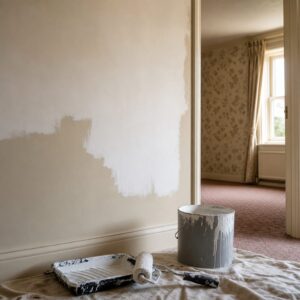
There's a smell that follows bereavement into a house. It's not the smell of flowers or sympathy cards going soft at the edges, but the smell that comes a few weeks later: white spirit, fresh emulsion, the sharp, plasticky smell of new carpet underlay. Someone has started decorating.
So common it barely gets remarked on, within a month or two of a parent dying, the surviving children are arguing with each other over whether to go straight to the magnolia or strip back to the plaster first, as they stand in the front bedroom with a wallpaper steamer. Nobody planned this as a ritual. Nobody thought of it as grief. But that's what it is.
Why the Walls Have to Change
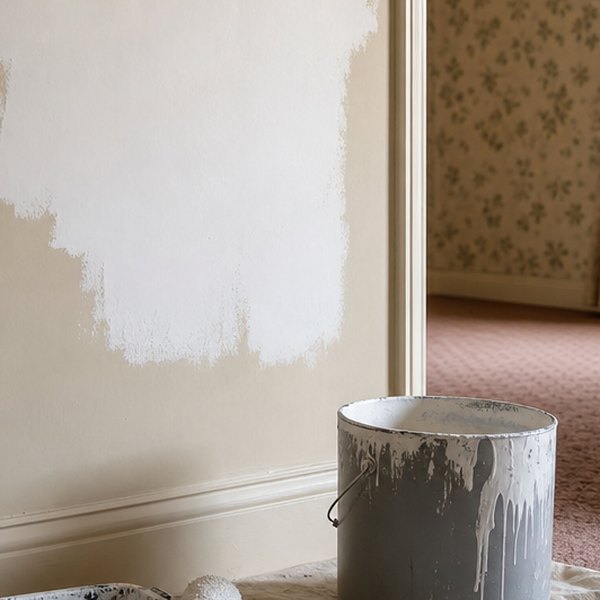
There are practical excuses for painting a house and they are not entirely dishonest. The old wallpaper really is tired. That carpet really has seen better days. A fresh coat of paint does help a house sell, if selling is what’s coming. But that is not the reason it happens within weeks rather than years.
It is an uncanny experience to live with someone else’s décor when that person is gone, and humans do not tolerate the uncanny for long.
It’s still their room, with the colours they chose, that border they spent a weekend putting up and that particular shade of green they always defended to visiting relatives — it’s all still there, intact, and it makes the absence louder rather than quieter. So we reach for the roller. Not to erase them, exactly, but to stop the room from insisting on their presence at full volume.
What Stripping Wallpaper Is Actually For
Wallpaper removal can be very, very satisfying. There is something irreversible about removing a surface layer by layer. Underneath you find evidence of previous owners, previous decisions, sometimes previous decades. A Seventies geometric under a Nineties stipple under the floral that your mother put up herself in 2003.
The house has been through this before, with other people standing in this room and changing it to suit themselves. Now it is your turn.
It is only when it is our turn that we can see the point of the whole thing. Inheritance law can hand you a property in an afternoon, but the emotional handover takes a lot longer and requires more physical effort — which is perhaps why inherited DIY jobs are done by hand, in person, by family members who could easily have just paid someone. This is not frugality; this is ritual.
The British Genius for Not Talking About Things (and Doing Them Instead)
In Britain, action comes more easily than articulation when it comes to grief. We make casseroles, tidy up and get on with things. When we inherit a house, we decorate it. It’s our claim to ownership – claimed not with paperwork but with paint. We say, “I was here, I chose this, this belongs to me now, and I am still here to make choices”.
The paperwork already involved in owning a house, which most people barely look at, is of interest here. The deeds, the covenants and the restrictions that run with the land govern what you may or may not do to the place you've just inherited. The Invisible Constitution Your House Already Lives Under at Perky Pad gives a clear breakdown of what those documents actually say, and why they matter once you start making changes.
The Room That Belongs to You Now
There's a moment in decorating a room, usually around the second coat, when the colour finally goes on properly and the room begins to look different. The room stops being theirs and starts being yours. Not in a way that forgets them. The opposite, really: you can think about them more clearly once the room has stopped impersonating them.
All those weekends with the steamer and the filler and the slightly-too-ambitious feature wall were not about home improvement, but something older and harder to name – the act of taking up residence in a life that has been handed to you and making it, gently and irreversibly, your own.
The paint dries, the smell fades, and somehow – in a way that no condolence card ever quite manages – the house feels liveable again.
Questions this raises
- Why do people redecorate so soon after a parent dies?
- How long should you wait before clearing a relative's home?
- Is it normal to feel guilty about repainting their room?
- Does redecorating actually help people through grief?