
There's a moment in most DIY projects where confidence peaks. You've watched the YouTube video, bought the right screwdriver and have the wires in hand. It can't be that hard, can it? For most of British history, the answer was: not hard at all, do whatever you like. Then people started dying, and the government changed its mind.
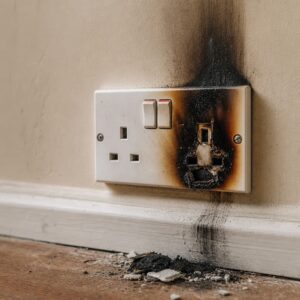
In the late 1990s and early 2000s, fire investigators started noticing a pattern. House fires attributed to faulty wiring were rising. A disproportionate share of them traced back not to ageing infrastructure or dodgy appliances but to amateur electrical work, such as adding sockets in kitchens, running new lighting circuits in bathrooms and extending ring mains in living rooms – all perfectly logical things to want, all done with reasonable confidence, many of them done badly enough to kill someone. By 2003, the statistics were alarming enough that the government convened a proper review. In 2005, Part P of the Building Regulations came into force. It was the first time in British history that domestic electrical work became subject to building control. A nation of weekend fixers blinked in surprise.
What Part P Actually Made Illegal (Sort Of)
This is where people get confused, because Part P didn't ban DIY electrical work outright. But all Part P did was create a category of ‘notifiable’ work – jobs significant enough that someone qualified has to either do them or certify them. Such notifiable work is technically non-compliant if it is done without sign-off. This matters enormously when a house is being sold and a buyers’ solicitor asks for the certificate. If there isn’t one, you’re in trouble.
Notifiable work covers all work in bathrooms (all of it, because water), new circuits anywhere in the house, replacement consumer units and any electrical work in kitchens as part of a larger installation. Work can be done without the need for someone to sign it off when it is replacement like-for-like for existing sockets and switches, replacement light fittings, and fused spurs added to existing circuits. This work does not require sign-off as long as it is not in a kitchen or bathroom and does not add a brand new circuit.
The Two Routes to Staying Legal
If you want new sockets wired properly in a room then you have two options. The first is to hire an electrician who is registered with a competent persons scheme such as NICEIC or NAPIT. They can then self-certify the work and issue you with a certificate directly. No council involved. The second is to do the work yourself or hire an unregistered tradesperson and notify your local building control authority before starting the work. They will inspect it and if it passes then they will issue you with a certificate. That costs money – typically somewhere between £200 and £500 depending on the council and the scope of work – and it requires booking in advance.
Most people don't know either option exists. They just do the work, don't tell anyone, and hope for the best. Which is fine right up until a buyer's solicitor asks for paperwork.
The Wall You're Drilling Into Has a Legal Life of Its Own
The most dramatic example is that of Part P, because of the deaths that preceded it, but this is not the only place where confident DIY bumps quietly into regulation. Structural work sits in a similar framework. Knock out a load-bearing wall without building control sign-off and you've created the same problem: unpermitted work, no certificate, awkward questions when you sell. The same applies to significant changes to external walls — installing bifold doors, for instance, which involves an opening, a steel, and usually a building control inspection. There is a helpful look at how that kind of project changes a living room here: 5 Living Room Ideas that Put Bifold Doors Front and Centre.
The Satisfying Thing About Knowing the Rules
Understanding Part P tells you exactly where your freedom is. Work not included in the notifiable list is yours. As long as you act safely and with care, you can change switches, move light fittings, replace sockets, or run a fused spur to a new position on an existing ring; no one needs to know. The rules aren't there to stop you tinkering. They exist because, in a specific decade, the tinkering killed enough people that the government decided some of it needed a grown-up to check.
The wire you're holding might be fine. It probably is. But now you know which wire needs a signature, and that's genuinely useful to carry around in your head.
Questions this raises
- What electrical work can you still legally do yourself?
- How much does a Part P certificate cost?
- When did Part P come into force in England?
- Does Part P apply in Scotland and Wales too?