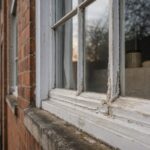
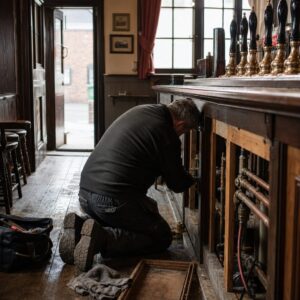
Walk past a Victorian pub on a wet Tuesday morning and there's a decent chance you'll see a van outside, a bloke carrying something heavy, and the landlord looking pained about it but not surprised. It is not a crisis. Nobody has rung a plumber in a panic. This is just Tuesday – it has always been Tuesday – and it is, quietly, the reason that Victorian boozers are still standing while the terraces that once surrounded them have been rebuilt, replumbed, and replaced at enormous expense.
The pub knows something about maintenance that most homeowners don't. Not a secret, exactly. More of a discipline. One that got baked into licensing law, insurance requirements, and simple commercial survival until it became instinct.
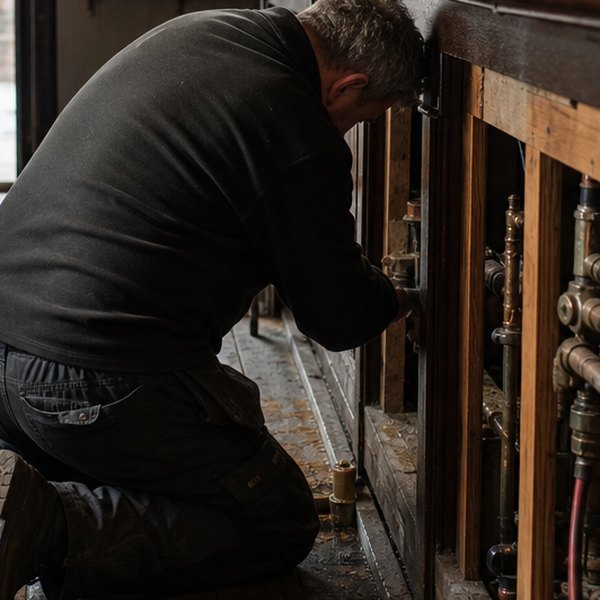
Closed Monday, Strip It Back Tuesday
Victorian publicans didn't do maintenance when things broke. They did it on a schedule, because a burst pipe on a Friday night – when the place is full, the barrel's on, and everyone wants a Mild – is not an inconvenience. It's a catastrophe. A closed pub loses money by the hour.
So Monday became the maintenance day. The quiet day. The day you got under the bar, checked the cellar seals, looked at the pipes, prodded the timber around the windows, and fixed the thing that was about to go wrong rather than the thing that already had. A licensed premises also had a landlord, a brewery inspector, and eventually a health and safety officer all with an interest in keeping the fabric of the building sound. Nobody had that kind of attention trained on the terrace next door.
The result, over a hundred and fifty years, is striking. Your local – the one with the frosted glass and the original tiled entrance – has had its gutters cleared twice a year, every year, since roughly 1887. The house three doors down has had them cleared when they started dripping on someone's head.
Why Private Buildings Don't Work Like This
There's nothing stopping a homeowner from adopting the same rhythm, but there is also nothing forcing them to. No licence to lose, no brewery inspector, no legal obligation to prove the boiler has been serviced. Most domestic maintenance happens in one of two ways: either someone very organised does it on a spreadsheet (rare), or everyone waits until the ceiling goes brown and interesting (common).
The commercial logic is different. A business building gets maintained before it fails because the cost of failure is immediate and public. A domestic building gets maintained after it fails because the cost is abstract until suddenly it isn't – until the rot you didn't look at has got into the joist, and the job that would have cost £40 in 2019 is now costing £4,000 in a hurry.
This is what the publican's Tuesday van is actually teaching: the difference between the cost of attention and the cost of neglect, measured in real money and real time.
The Bit That's Already Underground
There's a version of this same idea that goes even deeper than the cellar. The road your house sits on, and what's underneath it, was built to commercial tolerances from the start – gas mains, water infrastructure, the foundations of the street itself – all maintained on schedules your house has never matched. For a good explanation of how that works, and why it matters more than you'd think when you're buying a property, read What Your Street Is Standing On (And Why It Matters More Than The Kitchen) at Perky Pad.
The point is the same one the pub has been making since the reign of Victoria: the infrastructure around your home has been getting looked at regularly all along. Your home, probably not quite as often.
The Tuesday You Keep Meaning to Have
None of this means you need to hire a brewery inspector or start logging your gutters in a spreadsheet (though, honestly, the spreadsheet isn't the worst idea). It just means the pub's logic is available to anyone who wants to borrow it. A morning a year on the roof. A look at the pointing every autumn before the frost gets in. A quick check of the pipework under the kitchen sink before you forget it exists. Not glamorous. Not expensive. The pub didn't stay standing by being glamorous. It stayed standing by showing up on Tuesdays.
Questions this raises
- What does a pub's maintenance schedule actually cover?
- How often should a house get the same checks?
- Why does licensing law force pubs to keep up repairs?
- Can a homeowner run a maintenance calendar cheaply?