

Watch a small child walk into a room and you'll notice they don't really look at it. They touch it. Within thirty seconds they've pressed a palm flat against the wall, bounced slightly on the floorboards, and grabbed the nearest bit of furniture to see what it does. If there's a banister, they're on it. If there's a windowsill, their face is against the glass. They are not being destructive. They are doing something adults stopped doing somewhere around the time they started caring about scuff marks.
Here's the genuinely odd thing: that physical curiosity – the kind we tend to usher away from walls and doorframes with a quiet "don't do that" – is exactly what a house is asking for. Not from a child specifically. From anyone. Houses communicate their condition constantly through sound, through give, through the slight resistance of a door that didn't used to stick. Children still receive those signals. Adults mostly don't.
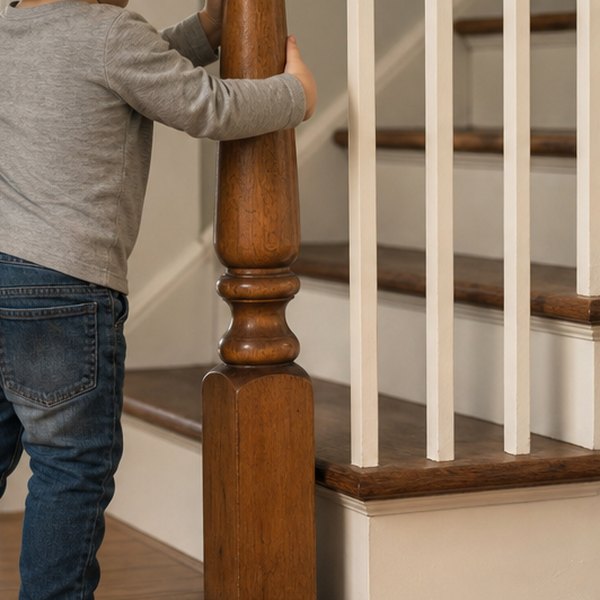
The Banister That Wobbles (Which Is the Whole Point)
A four-year-old who finds a wobbly banister will wobble it. Repeatedly. With dedication. An adult who finds the same banister will either not notice it, or notice it and file it somewhere in the back of the brain under "I should probably sort that" – where it will live comfortably for three years.
The wobble doesn't get better in there. It gets worse.
What's actually happening when a banister works loose is usually straightforward: the newel post has shifted, or the fixings at the base have worked themselves free through years of normal loading. Not drama. Tightening a banister newel is often a one-afternoon job involving a bolt or two and some wood adhesive. But left alone for a year or two? You're looking at a structural repair to the staircase – a different conversation entirely.
Children, by not knowing to file the wobble away, accidentally short-circuit the whole problem.
The Sticky Door (It Has Something to Say)
Doors stick for a few reasons, and not all of them are trivial. If a door is sticking at the top corner – particularly in a timber-framed or older house – it can be one of the earliest signs that something in the frame or the floor below has moved. It might just be humidity swelling the wood, common enough in Britain that you could make a calendar out of it, and planing the edge slightly will sort it. But sometimes it's telling you about settlement.
A child doesn't plane doors. A child shoves harder and harder until someone shouts at them, or they get it open. Either way, the point is they noticed. The slight grating, the resistance, the sound it makes – these are things an adult walks past forty times before they consciously register them. The door has been saying the same thing on every single pass.
What Touching the Wall Actually Tells You
Cold patches, soft patches, a faint crinkling of paint that hasn't quite blistered yet – these are things your hands would notice before your eyes do, if you ever put your hands on walls. Children do. They lean on them, press into corners, trail fingers along surfaces. Damp that hasn't yet showed up as a visible stain will often show up as a cold spot, or a slight sponginess, or paint that sounds fractionally hollow when you tap it.
None of this requires equipment. It just requires contact with the building you live in.
You can read more about what you're inheriting when you take on a property – the physical object and its body, not just its rooms – over at What You Buy When You Buy a House (It's Not What You Think).
The Habit Worth Stealing Back
The practical upshot of all this isn't complicated. Once every few months, try to move through your house the way a child does rather than the way a distracted adult does. Grab the banister properly. Open doors from different positions. Touch the wall under the window. Press on the sealant around the bath. Crouch down and look at the skirting boards. It takes about twenty minutes, and it will tell you more than two years of walking past things ever will.
You spent a very long time living in buildings that way, and you got quite good at it. You've just had decades of practice at being sensible and not sitting on the floor.
Questions this raises
- What should you check by touch around a house?
- How do you spot a loose banister before it gives?
- Does a bouncy floorboard mean a structural problem?
- Can you survey your own house without a professional?