

An estate agent will tell you about the south-facing garden, the original Victorian tiles and the ‘characterful’ layout that means the bathroom is inexplicably upstairs and to the left of a cupboard. What the agent does not tell you is what the house is actually sitting on. And that, quietly, is one of the most useful things you can know before you make an offer.
The geology of the UK is unusually complicated for a small island. Chalk, Clay, Sandstone, Limestone, River Gravel and Peat run in bands that cross the country, sometimes changing within a single postcode. In many areas the house price map of the UK and the geological map are not just related. They are nearly the same map drawn twice.
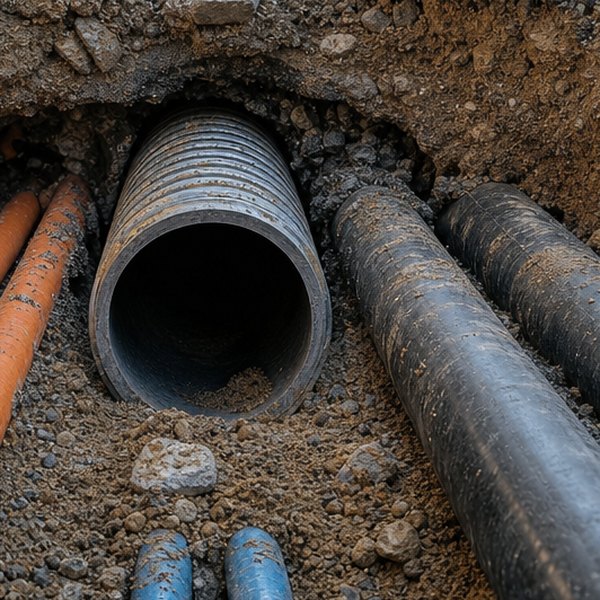
Clay: The Ground That Has Opinions About the Weather
Most of London and a broad belt across the Midlands sits on London Clay and its relatives. London Clay is a material with strong feelings, which in dry summers can shrink, sometimes dramatically, pulling away from whatever is sitting on it. Come the autumn rain, it swells back again. Do this for forty years under a Victorian terrace and many houses have cracks which appear in summer and close up again in October like nothing happened. The risk of subsidence is a fact of clay life, though not necessarily crisis-level.
So if you’re buying on clay and you see diagonal cracks at the corners of windows and doors that have started sticking in dry weather, these are worth asking about properly. A structural survey as opposed to a standard valuation survey is money very well spent here.
London and the commuter belt are expensive for plenty of reasons, but clay is not one of them. It probably should be.
Chalk and Sandstone: The Quiet Overachievers
The North and South Downs, the Chilterns, much of East Anglia and the Yorkshire Wolds are all underpinned by chalk which drains well and so the water tables are generally stable. This means the ground beneath your house tends not to have opinions about what season it is. Sandstone does much the same, and houses with chalk or sandstone foundations tend to have, on average, a less eventful life structurally.
The geology is at work in the price of those villages in Surrey and Buckinghamshire that command prices which seem to have only a loose relationship with the actual amenities. Not all of it, obviously. A good train line matters more than anyone's bedrock. But it is there.
Floodplain Gravel: Victorian Pragmatism You Are Still Paying For
River valleys across Britain, such as the Thames, the Severn, the Trent and their tributaries, are lined with flat gravel floodplains. The Victorians, building housing for the industrial working class fast and cheap, loved flat ground: it was easy to lay out streets on, easy to drain (more or less) and you could pack terraces in tightly. As a result, a huge proportion of the UK's Victorian terraced housing stock sits on former floodplain.
The upside: flat, often central, with that characteristic dense street pattern that walkers and cyclists love. The downside is flood risk – sometimes significant – and buildings insurance that can get expensive in ways that catch buyers off guard. The Environment Agency's flood map is free and takes only thirty seconds to check. Almost nobody does it before they fall in love with a house – check it before you fall in love with the house.
For thinking about how a property works day-to-day – the way the rooms function, how a small footprint can stretch to cover more life than it appears to – this piece on how to create a WFH office without losing a bedroom is a good read.
How do I actually use this?
The British Geological Survey has a free interactive map – search "BGS geology viewer" – where you can type in any postcode and see what sits beneath it. It is not light reading if you go deep, but a 'surface' view tells you whether you are on clay, on chalk or if it is wetter than that. A viewer can pair this up with the flood map to have two layers of information that almost nobody else in the viewing queue will have thought to look at.
Estate agents are selling you the house. The ground is not selling you anything – it is just there, doing what it has always done.
Questions this raises
- How do you find out what your house is built on?
- Which UK soil types cause subsidence?
- Does clay soil affect house insurance?
- Should a survey cover ground conditions?