Somewhere in your garden right now, a plant is doing maths. Not consciously, obviously – it's a plant – but quietly, chemically, in every leaf it has, it is measuring the hours. Not temperature, not rainfall, not how carefully you've been remembering to water it. Hours. The precise ratio of light to dark in a single day. And once that ratio tips past a certain threshold, the plant makes a decision: time to flower, or time to stop, or time to set seed and quietly call it a year.
This is photoperiodism, and it is almost certainly governing more of what happens in your garden than your soil pH, your compost, or your watering schedule ever will.
It's Not About Brightness. It's About the Clock.
The thing that trips most gardeners up – understandably – is assuming that plants are responding to the intensity or warmth of light. More sun equals more growth, less sun equals less. But that's not what photoperiodism is. A plant measuring its day length doesn't care whether the light is blazing midsummer sunshine or the thin grey wash of a British October afternoon. It's counting duration, not quality. Specifically, it's measuring the length of the dark period – the unbroken stretch of night between one day and the next.
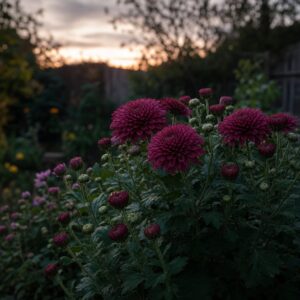
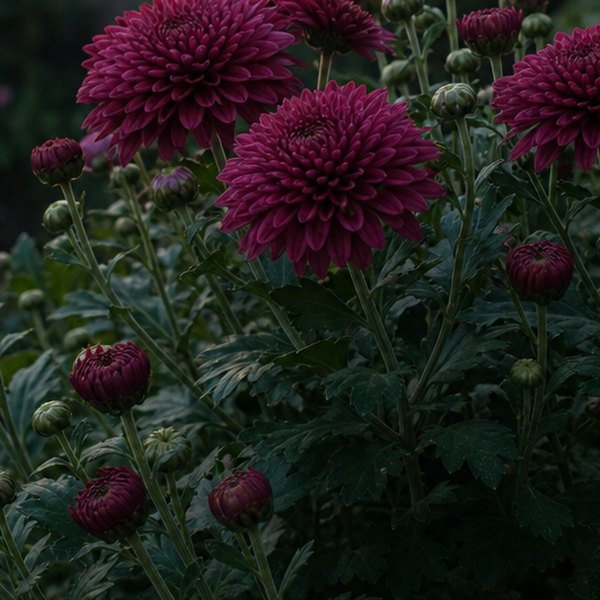
Chrysanthemums, for instance, won't flower until the nights are long enough. They're what botanists call "short-day plants" – though "long-night plants" would be more accurate, since it's the darkness they're actually clocking. Dahlias are similar. Clover, on the other hand, waits for long days (short nights) before it flowers. Strawberries stop producing runners when the nights shorten. Every plant has its own internal threshold, its own sense of when the season has shifted far enough to justify the enormous energy cost of reproduction.
The Security Light That Confused an Entire Border
Here's where it gets genuinely strange. If a plant is measuring the dark period, any interruption to that darkness – even a brief one, even a faint one – can reset the clock entirely. A security lamp that trips at 2am. A car parked with its headlights sweeping across a flower bed. A streetlight outside a window where you've moved a houseplant for the winter.
To you, these are trivial. To a chrysanthemum, a dahlia, a poinsettia sitting on a windowsill, they are the difference between November and June. The unbroken dark never comes, so the signal never fires, and the plant sits there confused – holding back its flowers, or refusing to set seed, or simply not doing the thing you've been waiting all season for it to do.
Commercial growers use this deliberately. Chrysanthemum farms keep plants under blackout curtains to manufacture artificially long nights, producing flowers for the market in months when the plant would never naturally oblige. Poinsettias – those enormously popular Christmas plants – need weeks of uninterrupted long dark periods to turn their leaves red. Sit one on a windowsill near a streetlit road, and it may simply never colour up properly again.
For a bit more on the hidden rules that quietly govern what seems like a simple transaction – whether that's buying a house or understanding what you're actually agreeing to – The Words You Sign Your Life Away With.
What This Changes in a Practical British Garden
Knowing this makes sense of things that otherwise seem random. Why do your sweet peas bolt to seed by mid-July no matter what you do? Because the long days have already crossed their threshold, and they've decided the season is over. Why does that pot of chrysanthemums on the back step refuse to flower indoors but blooms fine when you put it outside? Because your indoor lighting, left on through the evenings, is breaking the dark period and scrambling the signal.
It also explains why moving plants around matters more than people realise. Windowsill to back bedroom. Kitchen to conservatory. Each shift changes the light environment in ways that have nothing to do with warmth.
The Season Your Plant Is Living In Might Not Match Yours
The useful thought to carry away from all of this is that your garden and you are not necessarily experiencing the same season. You feel September as "almost autumn". Your dahlias have been quietly certain it was autumn for three weeks already, the moment the nights crept past their threshold. The soil, the rain, your opinion – none of it counted for much. They were watching the dark.
Questions this raises
- Which garden plants are triggered by day length?
- Does a nearby streetlight upset a plant's flowering?
- How do growers force flowering out of season?
- Can you change flowering times by covering plants up?