
Around the middle of August, most British gardeners start tidying up. The dahlias are going over, the courgettes have done their worst, and there's a general feeling that the year is drawing in and winding down. The garden is closing for business. It's time to have a clear-out, maybe order some bulb catalogues and wait for spring to do something interesting again.
The plants have a completely different diary.
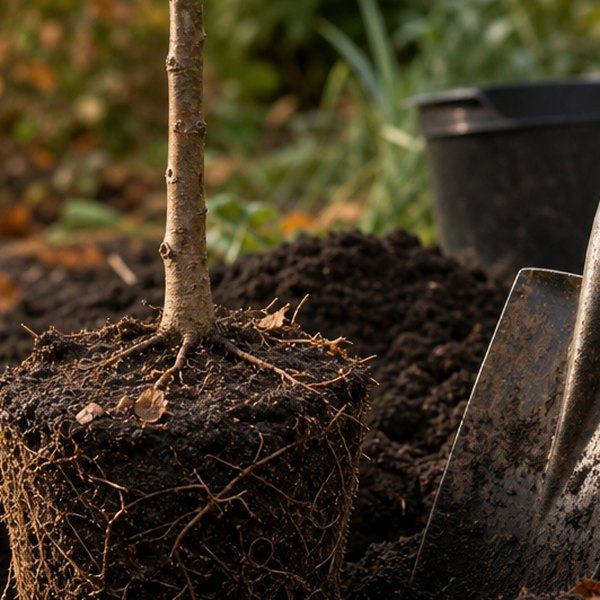
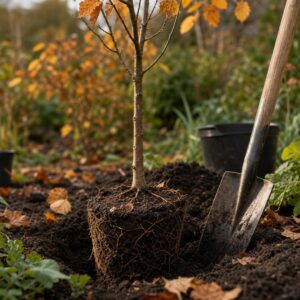
Roots stretch into the cool soil that is still warm from summer by mid-August to late October, or the six weeks or so either side of the autumn equinox. Bulbs are planted out in the ground and over the next three months build their root architecture before a single green tip appears. Trees and shrubs planted in October establish themselves over winter and hit the following spring already established, already drinking, already at home. Trees planted in April spend weeks in a kind of suspended shock before they can even begin. For woody plants, autumn planting is simply better by a margin that experienced nursery staff will tell you is not even close.
The Season That Works in the Dark
While gardeners can see and feel the air temperature, such as on chilly evenings with foggy mornings and the light going golden at four o'clock, they never think about the soil temperature. It lags behind the air temperature by weeks and, in most parts of the UK, soil at a foot's depth stays above 10°C well into November. It is warm enough for root growth to continue and for the microbes that make nutrients available to stay active. While we are watching telly under blankets the garden is still at it.
This is why hardy bulbs planted in September and October reliably outperform the same varieties planted in late winter. They're not waiting for spring to get started. They've already got a head start buried quietly under the lawn.
What the Gardener Sees vs What the Plant Thinks Is Going On
To the gardener, an autumn-planted tree looks the same for months. Yet to the plant, autumn plantings are opportunities: decent soil warmth, reliable rainfall, and no demand to produce leaves or flowers yet. Just pure root expansion. All that energy a spring-planted tree diverts upward into early leaf growth — the impressive-looking flush that makes you feel good about having just planted something — is invested downward instead. Quietly and invisibly, through the whole winter. It looks like nothing is happening for months, but come spring, it shows up not just with new leaves but with actual infrastructure to support them.
For a thoughtful look at the stranger decisions buried inside how we relate to land and property, The Beetle That Invented Your Mortgage is genuinely worth twenty minutes of your time.
The Particular Case for Autumn Planting
Bare-root season is an autumnal secret for gardeners, and hedging plants, roses, fruit trees and native shrubs are sold as bare-root plants from November onwards. They have been dug up while dormant and dispatched to you as a bundle of sticks. Bare-root plants are cheaper than plants that are sold in pots – often by 50% or more – and they travel better and establish faster. A bare-root rose planted in November will often outgrow and outperform a containerised rose planted in May. But bare-root plants are unheard of to most gardeners, because the garden centre, reasonably enough, prefers to sell you the pot.
A Good Six Weeks, If You Use Them
None of this requires you to change your gardening in any dramatic way. Just a reframing of what the autumn period actually is. The gardener who cuts back and composts spent annuals in September and October is doing sensible work. But there is a window of opportunity and it is about to close with the first hard frost, missing what the soil is ready to do.
Plants are not winding down, they are working hard down in the soil in their own quiet way.
Questions this raises
- When should spring bulbs go in the ground in Britain?
- How late in autumn can you plant before soil turns cold?
- Is autumn better than spring for planting shrubs?
- Does cutting perennials back in autumn harm the roots?