
A judge once spent three days deciding in a county court archive whether or not a garden ornament is part of a house. The question was whether the object had been there long enough, and fixed firmly enough, to have stopped being an object and started being architecture. Eventually he decided it had. The ornament stayed with the property. The sellers were furious.
The law of fixtures and chattels is one of the stranger corners of British property law. It turns almost entirely on maintenance.
What Moves Out With You (And What Doesn't)
When you sell a house you take your things with you. That is obvious. However some of your things, legally, are no longer your things – they belong to the building. These are called “fixtures” and automatically transfer to the buyer of a property. They have become so thoroughly part of the fabric of the property that they transfer without anyone having to list them, negotiate over them, or even think about them.
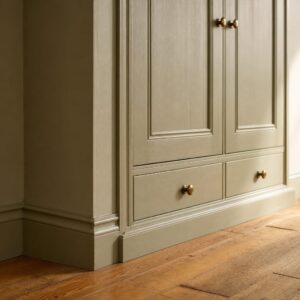
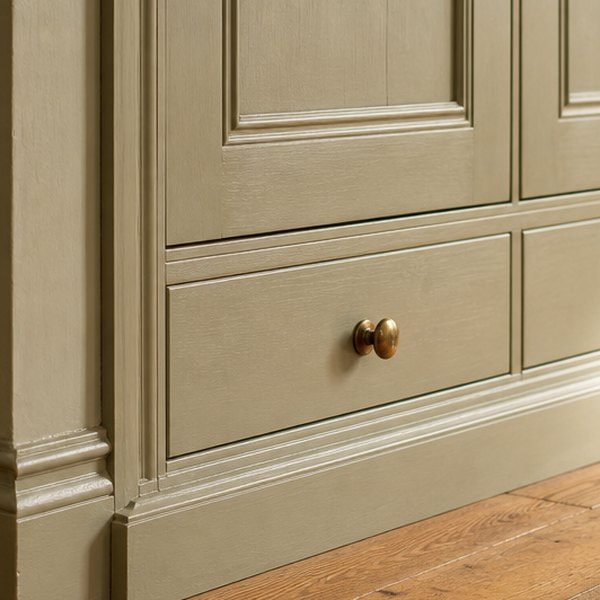
To decide whether something is a fixture, there are two parts: 1) how firmly is it attached? and 2) why was it attached? A freestanding wardrobe is a chattel, yours to take with you. A wardrobe bolted to the wall, built around the alcove, with skirting board running flush to its base? That wardrobe has become part of the house – very quietly.
And here is where maintenance enters the picture.
The Slow Alchemy of Looking After Things
A curtain rail put up carelessly, with a couple of rawl plugs half pulled from the plaster and the bracket sitting at a slight angle, is almost certainly a chattel: barely attached, came from a shop, could be taken down in four minutes. But the same curtain rail, properly fixed into the structural timber, repaired when a bracket worked loose, repainted when you repainted the woodwork, now sits in the room as though it grew there. The courts have found, in cases like this, that the intention behind the fixing matters enormously, and that if you maintained something as though it were part of the building, it has a habit of becoming part of the building.
Which means every time you do a proper repair rather than a bodge, you are – without knowing it – participating in a legal process. You are slowly enrolling an object into the house.
The Knowledge That Would Have Helped
But there's more sadness here. We used to know more about buildings than we do now – not just how to maintain them, but what maintenance was actually for. The Colour Knowledge That Died Quietly in the 1980s touches on exactly this: the way practical, craft-level understanding of how houses work got quietly lost, replaced by a vague idea that you paint walls to make them look nice and fix things when they visibly break. The fixtures-and-chattels story is part of this disappearance.
People stopped understanding that maintenance is not just upkeep. It is the slow legal and structural process by which a building becomes coherent, by which objects stop being things placed inside it and start being part of it.
A Century of Arguments About Bolts
British courts have been rowing about this distinction for well over a hundred years. In the case of Hobson v Gorringe (1902) a gas engine was held to be a fixture because it was bolted to a concrete bed in the floor. Later cases wrestled over fitted carpets (usually chattels), kitchen units (usually fixtures), light fittings (depends) and swimming pools (definitely fixtures, which caused no end of grief). The case law is genuinely fascinating if you like watching clever people argue about whether a bolt changes the nature of reality.
What all these cases share is the same underlying question: has this thing been maintained as part of the building, or merely stored inside it?
The Difference Between Fixing and Bodging
A bodge is temporary. It proclaims its own impermanence: gaffer tape over a crack, a screw where a proper rawl plug should be, a bracket held up by optimism. Legally and practically, a bodge is a chattel in spirit – it hasn't been committed to the building. A proper repair is the opposite: it says this is staying, this belongs here, I am folding this object into the house.
So next time you're up a stepladder doing a job properly when you could be doing it quickly, know that you are not just a conscientious homeowner. You are an amateur conveyancer, quietly reshaping what the house is.
Questions this raises
- What counts as a fixture when you sell a house?
- Is a fitted wardrobe a fixture or a chattel?
- Can a seller remove light fittings before completion?
- How should fittings be recorded on the TA10 form?