You water your plant every evening, scatter expensive fertiliser around its roots like you're salting a good steak. You read every label and follow every instruction. Your plant turns yellow, sulks and eventually gives up entirely, and you never understand why. You can blame yourself, the weather, or even the universe's mood that summer. But the actual culprit is usually a single number you never thought to check.
That number is pH. And it's been quietly locking the larder door.
What pH Is Actually Doing Down There
Soil pH is a measure of how acid or alkaline the soil is. It is measured on a scale of 0 to 14 with 7 in the middle of the scale being neutral. For most garden plants the soil pH they want is slightly acid to neutral (6 to 7). But why are plants so fussy? The reason for this has to do with chemistry, and it's weirder than you'd expect.
The nutrients plants need (iron, manganese, phosphorus, calcium, magnesium, the whole lot) are bonded to the soil particles. How tightly they bond, and whether a plant root can actually pull them free, depends almost entirely on the pH of the soil. Tip the soil too acid (below about 6) and nutrients like phosphorus bind so firmly to the aluminium and iron particles that roots simply cannot access them. At the other end, tip it too alkaline (above about 7.5) and iron and manganese lock up in a completely different chemical reaction. They become insoluble and untouchable.
The food is there. The shelves are stocked. The larder door won't open.
The Plant That's Starving in Front of Your Eyes
This is what makes pH failures so quietly devastating. A plant starved by pH problems does not look neglected — it looks fed and watered, because it is. The trouble is that it’s slowly starving, unable to reach the meal right next to it.
The most common sign is chlorosis: yellowing leaves with green veins. It looks like a watering problem, or perhaps a disease, which is why gardeners keep watering and treating and fertilising, pouring more food into a larder that’s already full and still locked. Throwing extra fertiliser at a pH problem doesn’t help. In acid soil, extra phosphorus only means more phosphorus that can’t be absorbed. The shelves have been restocked but the door still will not open.
Rhododendrons, blueberries and camellias are the famous acid-lovers, the ones that need a pH of about 5.5 so that they can access the iron they need. If you plant these in an alkaline chalky border they will yellow within a season. Lavender and clematis lean the other way entirely. Getting them wrong doesn't feel like a chemistry mistake, more just bad luck.
Where the pH Scale Came From
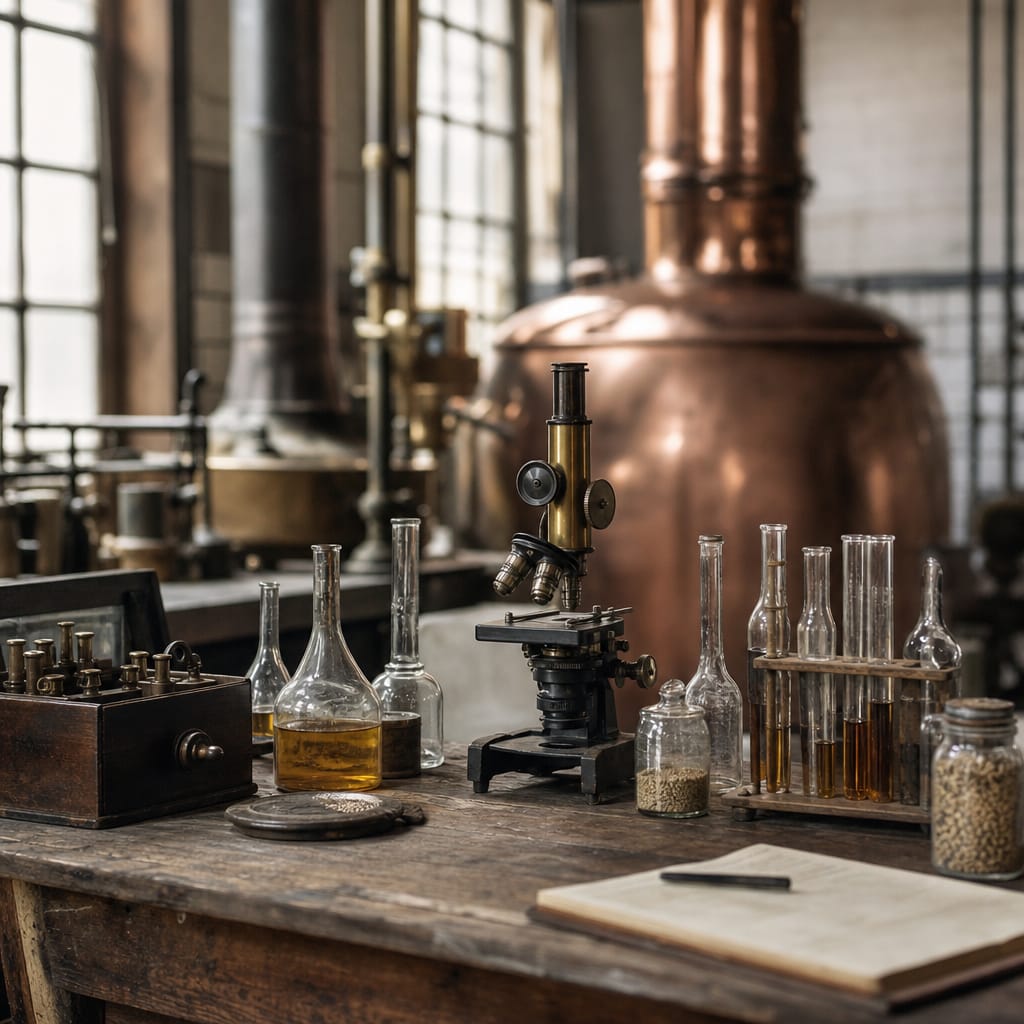
The scale on your test kit is not designed with gardens in mind. The Danish chemist Søren Sørensen laid out the pH scale in 1909 whilst studying enzymes at the Carlsberg Laboratory in Copenhagen, the research laboratory founded by the Carlsberg brewery. Chemists and later soil scientists and farm advisers have been using the same principles over the decades and today the same scale is printed on the back of almost all bags of compost for gardeners to use.
Most inexpensive test kits work on the same principle. Mix a small amount of soil with water and the indicator solution. Shake the mixture and the indicator will change colour depending on the acidity of the mixture. Refer to the printed chart and match the colour of the mixture to get a rough pH reading. The gardener can then decide to add lime, add something acidic or do nothing at all.
How to Pick the Lock
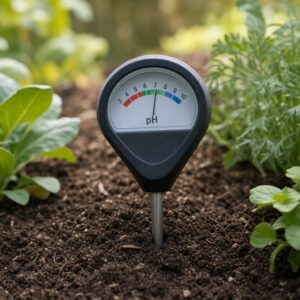
Testing your soil pH costs almost nothing. Most garden centres carry basic soil testing kits with colour charts that tell you roughly where you stand in about five minutes. If you want to be more precise, electronic soil testing meters are widely available and reusable. It’s worth testing soil pH in a few spots too, as pH can vary surprisingly across a single garden. This is especially so if different areas have had different things dug into them over the years.
If your soil is too acidic then adding ground limestone (calcium carbonate) will bring it back up. It works slowly — weeks to months — so it’s worth doing in autumn before spring planting. A couple of handfuls per square metre is usually enough to start moving things, though heavy clay soils need more patience than sandy ones. To bring an alkaline soil down, work in sulphur or acidic organic matter such as composted pine needles. This is slower work, and rarely dramatic in a single season.
Target pH for common crops
For most garden plants, the ideal pH is around pH 6.5, the ‘best general-purpose’ garden pH as described by the RHS. There are a few exceptions, and knowing which they are saves a lot of time when planning garden beds for next year.
| Plants | Rough target pH | Why |
|---|---|---|
| Most vegetables and flowers | 6.0 to 7.0 | The widest range of nutrients is available |
| Potatoes | Around 5.5 | Slightly acid soil helps keep common scab down |
| Cabbages, sprouts and other brassicas | 7.0 or a little above | Alkaline soil reduces clubroot, so the bed is usually limed before winter |
| Blueberries, rhododendrons, camellias | 4.5 to 5.5 | Acid-lovers that struggle to take up iron in neutral or chalky soil |
Wait before testing the soil pH after you have added lime, fertiliser or organic matter. The RHS warns that a reading taken within three months can be misleading, so if you added lime in autumn, for example, wait until spring and test again to see if it has had any effect.
Timing matters as much as the dose. For more on how the gardening year runs, see Your Garden Is Running on a Clock You Can't See.
The Yellow Leaves That Weren't Your Fault
Once you know about pH, failure is no longer personal. That rose that never performed, that courgette that did not set fruit, despite being watered daily, and that patch of lawn that stayed pale and thin, while the rest came up lush – all of them might simply have been sitting over the wrong chemistry, asking for a key that you did not know they needed.
One small test, and you stop blaming the weather.
FAQ
What pH do most garden plants need?
Most garden plants thrive in slightly acid to neutral soils with a pH between 6 and 7. For the average garden, the RHS describes an ideal pH as around 6.5. Vegetables and flowers grow well in a pH range of 6.0 to 7.0. Potatoes prefer slightly acidic soils with a pH of about 5.5, while acid-loving plants such as blueberries, rhododendrons and camellias need soils with a pH range of 4.5 to 5.5.
Why are my plant’s leaves turning yellow when I feed and water it?
Plants go yellow because the wrong pH means that the nutrients are in the soil but they are locked up so that the roots of the plant can’t get at them, even when there are plenty about. Below about pH 6, phosphorus is bound to particles of aluminium and iron in the soil. Above about pH 7.5, iron and manganese become insoluble, and the classic sign is chlorosis, in the form of yellow leaves with green veins. Extra fertiliser won’t help.
How do I test and change my soil pH?
Use a simple test kit available from garden centres. Mix a small amount of soil with water and add the indicator solution. After about 5 minutes compare the resulting colour with the colour chart provided. Note that electronic meters are reusable. Take readings from several spots. Ground limestone will slowly raise the pH over weeks/months whereas sulphur or composted pine needles will lower the pH.
How long should I wait to retest soil pH after adding lime?
Wait at least three months after applying any of these treatments, the period the RHS recommends for the reading to become reliable. Lime, for example, takes weeks to months to start to take effect, so if you added it in autumn, test again in spring, and it is as well to wait the same period to test the soil pH after application of fertilisers and organic matter.