
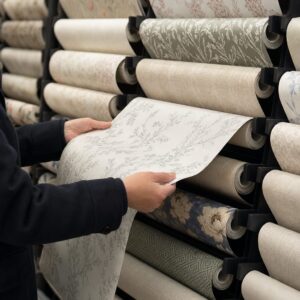
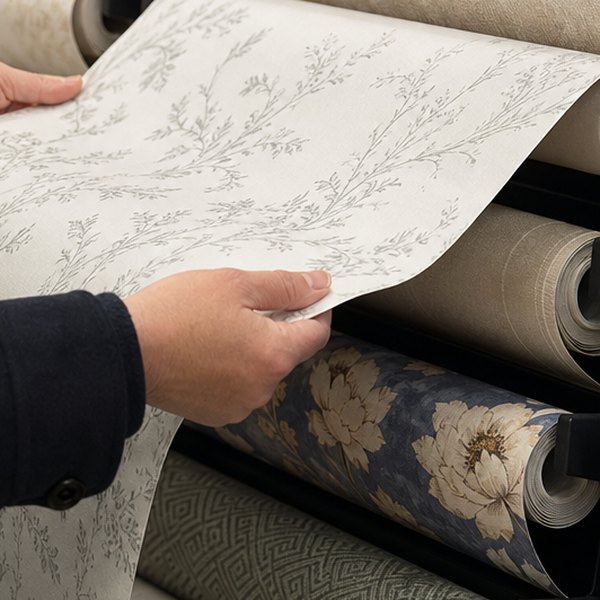
There's a recession on. You can't afford to move and a new sofa is out of the question. But on a wet Tuesday afternoon in a B&Q, you are standing in front of the wallpaper display, pulling out rolls and holding them at arm's length. You are absolutely going to buy one. Maybe two.
This is not new and is one of the most reliably documented patterns in British retail history. The wallpaper industry has known about it for decades, even if they've never exactly shouted about it.
The Boom That Happens When Everything Else Goes Wrong
Anaglypta has benefited from every major British financial squeeze of the last eighty years: wallpaper sales climbed after the Second World War, as rebuilding costs were astronomical and most families were crammed into whatever housing survived. They climbed again during the 1970s’ stagflation, with terrifying energy bills and stalled house moves. They climbed again after 2008, when the mortgage market effectively stopped working for a generation of would-be buyers.
Luxury goods are not supposed to behave this way. Champagne sales fall in recessions. Foreign holidays fall. New sofas, kitchens, conservatories – all fall. But wallpaper, stubbornly, rises – again and again – often enough that manufacturers have actually built their business models around it.
Which tells you something rather interesting about what wallpaper is actually for.
Not Decoration. Territory.
This is the ‘boring explanation’ for wallpaper sales – it is cheap relative to other home improvements, so people trade down to it. True, but incomplete. Emulsion paint is cheaper still. Plain paint sales do not show the same counter-cyclical spike. There's something more specific going on.
You can’t move. You can’t extend. You can’t rip out the kitchen and start again. So you are living inside someone else’s decisions. The previous owners chose that layout. The landlord chose those carpets. The mortgage trap chose that postcode. A room that felt temporary when you moved in (you were planning to leave in three years) now feels like a sentence.
There’s no cheaper way to say “this is mine” than with wallpaper. I’m not referring to the building, the freehold or the square footage of the rooms. I’m referring to that wall, in that room, in that corner of the world I am stuck in. This I have claimed. You can do it in a weekend, for under a hundred pounds. And the effect on how a space feels is disproportionate to both.
Paint does not have the same effect. Wallpaper requires a decision about pattern and so reads as more intentional than a lovingly applied coat of Farrow & Ball – it announces that someone lives here and has opinions about it.
For more on the psychology of feeling at home in a space you didn't design, What Five-Year-Olds Know About Buying Houses That You've Already Forgotten is well worth your time.
The Accent Wall as Economic Indicator
But that’s not all – each recession hasn’t just produced a spike in wallpaper sales, it’s produced a specific wallpaper trend that corresponds almost perfectly to what people are anxious about in that particular moment.
The postwar period saw heavily patterned, almost aggressively decorative papers, with big florals and busy geometrics. These were the years of Make Do and Mend after years of utility restrictions, when people papered their walls in abundance, even if that abundance was imaginary. The 1970s were all about earthier, warmer tones – ochres, terracottas and harvest golds. It was a moment when home was becoming the one place that felt stable. After 2008, the dominant trend was vintage and heritage prints – Victorian botanical drawings, Edwardian tile patterns and William Morris revivals. People were choosing the past, when the present felt unreliable.
They weren't picking wallpaper randomly. They were decorating toward whatever feeling the economic moment was taking away from them.
What This Means for Your Walls
If you are in a place you can't easily leave, or a place you didn't entirely choose, and you are standing in front of a wallpaper display feeling slightly embarrassed that you are taking this all so seriously – don't be. Humans have always drawn a small border around one room when the world outside gets difficult, and said yours.
The industry built a business around your instinct. The instinct was right.
Questions this raises
- Why does wallpaper sell better during a recession?
- Is wallpapering cheaper than repainting a room?
- Which rooms suit wallpaper best?
- How long does modern wallpaper actually last?