
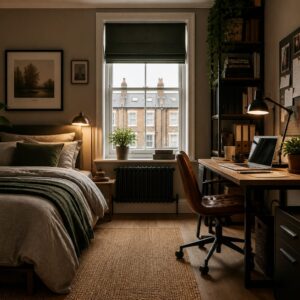
For most of human history, the idea that you might have a room just for sleeping in would have seemed almost offensively wasteful. Medieval great halls were sleeping quarters, dining rooms, meeting spaces and occasionally courtrooms, all at once. Tudor farmhouses had a single main room where the family ate, worked, argued, recovered from illness and, often enough, died. The walls didn't judge. The space just got on with it.
Then Came the Victorians
Then came the Victorians, and they had opinions.
As industrialisation pushed a new middle class into existence, that class needed a way to show it had arrived. The solution, it turned out, was rooms. Lots of them, each with a single dedicated purpose: a drawing room for receiving guests, a dining room for eating, a morning room for letters, a study for the man of the house, a nursery tucked safely out of earshot. The more rooms you had, the more separate and purposeful each one was, the more thoroughly respectable you were. The working classes, who had one room and put it to frankly heroic use, were considered not just poorer but morally inferior, as if the squalor of multi-purpose living was a character flaw rather than an economic reality.
Where the Guilt Comes From
This is where the guilt comes from. That faint, nagging feeling that a room ought to have one job and stick to it – that putting a desk in your bedroom is somehow a failure of proper domestic organisation – is not some ancient human instinct. It was invented by people who wanted to feel better than their neighbours, and it is barely 150 years old.
British housing absorbed this logic completely. The rooms in most Victorian and Edwardian terraces, the kind that make up a huge proportion of the UK's housing stock even now, were designed around that single-function ideal. You can still see it in the way estate agents list properties: reception room, bedroom, study. The names carry the assumption that each space has a destiny, and yours is not to mess with it.
We Have Been Messing With It for Decades
Except, of course, we've been messing with it for decades. The open-plan revolution of the 1990s knocked walls down and merged the kitchen with the living room, which caused a certain amount of hand-wringing and then became entirely normal. Nobody feels guilty about cooking and watching television in the same room any more. The kitchen-diner is considered aspirational, not degenerate.
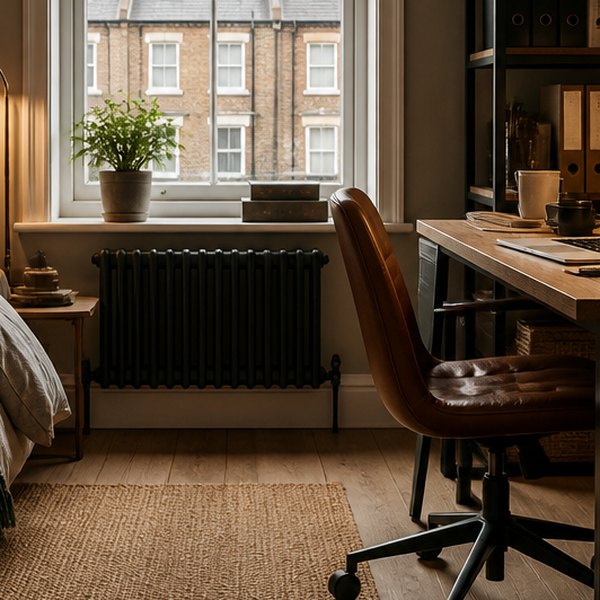
And yet the bedroom-office still makes people twitch. Perhaps because the bedroom is the last truly private room, the one that kept its Victorian sense of sanctuary longest. Putting work in there feels like a category error, like bringing the office into church. But this is a very modern anxiety about a very old arrangement. For most people throughout most of history, where you slept was also where you kept your accounts, your tools, your correspondence. It was just a room, and rooms were useful.
How do you make one room work for several uses?
The people redesigning their spare bedrooms as proper home offices are not, as the slightly mournful phrase has it, "losing a bedroom." They are recovering something older and more practical – the room that does what it needs to do. The trick, if there is one, is that those Victorian designers were right about one thing: dedicated space does change how you feel in it. A corner with a door that closes, a desk facing away from the bed, storage that keeps the two lives from bleeding into each other – these things matter. Not because activities must have separate rooms, but because the brain is easily confused and benefits from a little architectural honesty. For ideas on how to actually pull this off, have a look at Real Homes’ bedroom office ideas for tiny spaces.
The irony is that making a room work for two purposes properly takes more thought than giving it just one. The Victorians had the luxury of space and staff. Most of us have a spare room, a laptop and a firm intention to stop working by six – and getting that balance right isn't a compromise forced on us by smaller houses and changing times. It's the oldest domestic problem there is: how do you live well in the space you actually have?
Turns out people have been solving it since long before anyone had a morning room for letters.
Questions this raises
- When did British homes start having separate bedrooms?
- Why are new-build rooms smaller than Victorian ones?
- Is open-plan living a return to the medieval hall?