
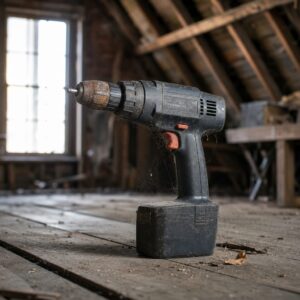
In a British loft somewhere, there’s a half-used tube of Polyfilla, a set of tile spacers and a Black & Decker drill that has not been touched since 1987. They are there because of inflation – specifically the catastrophic, wage-eating, tradesperson-pricing-you-out inflation of the 1970s. That decade turned an entire generation of ordinary British people into reluctant builders, tilers, plasterers and electricians. And they’ve handed on that identity to every generation since.
The 1970s were, by almost any measure, a terrible decade to own a house. Inflation peaked above 25% in 1975, and labour costs for tradespeople rose accordingly. So that for many households, hiring a plumber or a plasterer went from an inconvenience to a genuine financial crisis. So they stopped doing it. They bought magazines instead.
The Magazines That Made a Nation Pick Up a Trowel
Practical Householder had been around since the 1950s, but it was the 1970s that turned DIY publishing into a proper industry. The magazine Do It Yourself, launched in 1957, found its mass audience in this decade, alongside other step-by-step guides to tiling, rewiring, laying parquet and building lofts. The readership was not hobbyists pottering about on weekends. It was people who genuinely could not afford not to learn.
B&Q opened its first branch in Southampton in 1969. However, it was not until the 1970s and 1980s that the chain really expanded, as the public attempted the jobs it needed the supplies for. Homebase arrived in 1979, and a whole parallel retail economy appeared, built on the premise that the British homeowner would work it out themselves if given no other option.
What Got Passed Down, and What Got Muddled
Much of the knowledge that generation acquired was sound, so where parents showed you how to bleed a radiator, how to fit a plug and how to use a spirit level, they were probably right. The fundamentals of basic home maintenance are keeping moisture out, keeping things level and not overloading a circuit. These are not particularly era-specific, and the 1970s generation learned them in circumstances that made the lessons stick.
Some of what has calcified into 'received wisdom' is however less reliable. Take painting, for instance. The insistence on always going wall-before-woodwork, or the idea that you cannot roll emulsion onto a surface that has been previously brushed. Neither is actually a rule – just habits that became doctrine because nobody questioned them. Similarly, the conviction that artex ceilings must be covered rather than removed: understandable given the genuine asbestos risk in some pre-1980s artex, but now applied as a blanket rule to ceilings that are perfectly safe to tackle.
For a useful read on the hidden history behind British homes and the decisions people make around them, The Beetle That Invented Your Mortgage is worth a look.
The Self-Taught Plaster Ceiling and Why It's Still Up
There is also the matter of quality. A generation that learned to plaster from a magazine in 1976 produced a lot of plastering, some of it excellent, kept up by practice and genuine aptitude, and some of it behind your living room wall right now, and the reason your wallpaper keeps lifting at the corner. The DIY of the 1970s produced competent amateurs in enormous quantities, which is genuinely impressive. A lot of it would have been done differently had it been done by a professional, but it is now entombed in houses all over the country.
None of which is a criticism. Given the economic conditions, it was the right call. A damp wall and no money was the alternative. But they learned, they built, they fixed. And they passed the knowledge on – imperfectly, enthusiastically, and with the occasional confident error included free of charge – in the way all folk knowledge travels.
The Inheritance You Did Not Ask For
The response to this emergency became a cultural identity. DIY in Britain is not just a practical activity; it carries a moral charge. There’s the sense that it’s the proper, self-sufficient thing to do and that calling in a professional is somehow an admission. This is not something that came from nowhere. It was forged in a decade when calling a professional was genuinely not an option for large numbers of people. The Polyfilla and the drill have been rattling around British homes ever since.
FAQ
Why did people in Britain start doing DIY in the 1970s?
Rising prices forced it. With inflation peaking above 25% in 1975, the labour charges of tradespeople to carry out repairs rose with it. With hiring a plumber or plasterer becoming a real financial crisis for many households, the option of paying for their labour was ruled out and people were forced to buy magazines and other supplies to teach themselves the necessary repairs.
When did B&Q and Homebase start?
Although B&Q opened its first store in Southampton in 1969, it was not until the 1970s and 1980s that the retailer began to expand, as consumers began to take on DIY projects that required the purchase of supplies. Homebase arrived in 1979 and together the pair had created a parallel retailing economy for homeowners to complete DIY projects for themselves.
Do artex ceilings always have to be covered rather than removed?
Not all the old advice is good to apply as a blanket rule though. Some of it comes from a real asbestos risk with some artex from before 1980, and so is understandable. But it is now applied to ceilings where it is not needed, and has become part of a dogma of other habits, such as always painting the walls before starting the woodwork.
Was 1970s DIY work any good?
Much of it was of a decent quality and covered the fundamental points that still hold: to prevent damp, to keep things level and not to overload a circuit. However, some plastering seen in domestic properties was taught from magazines. Some of this is still behind living room walls. Much of this could have been done differently had it been done by a proper tradesman. It may explain wallpaper coming away from the corners of the walls.