
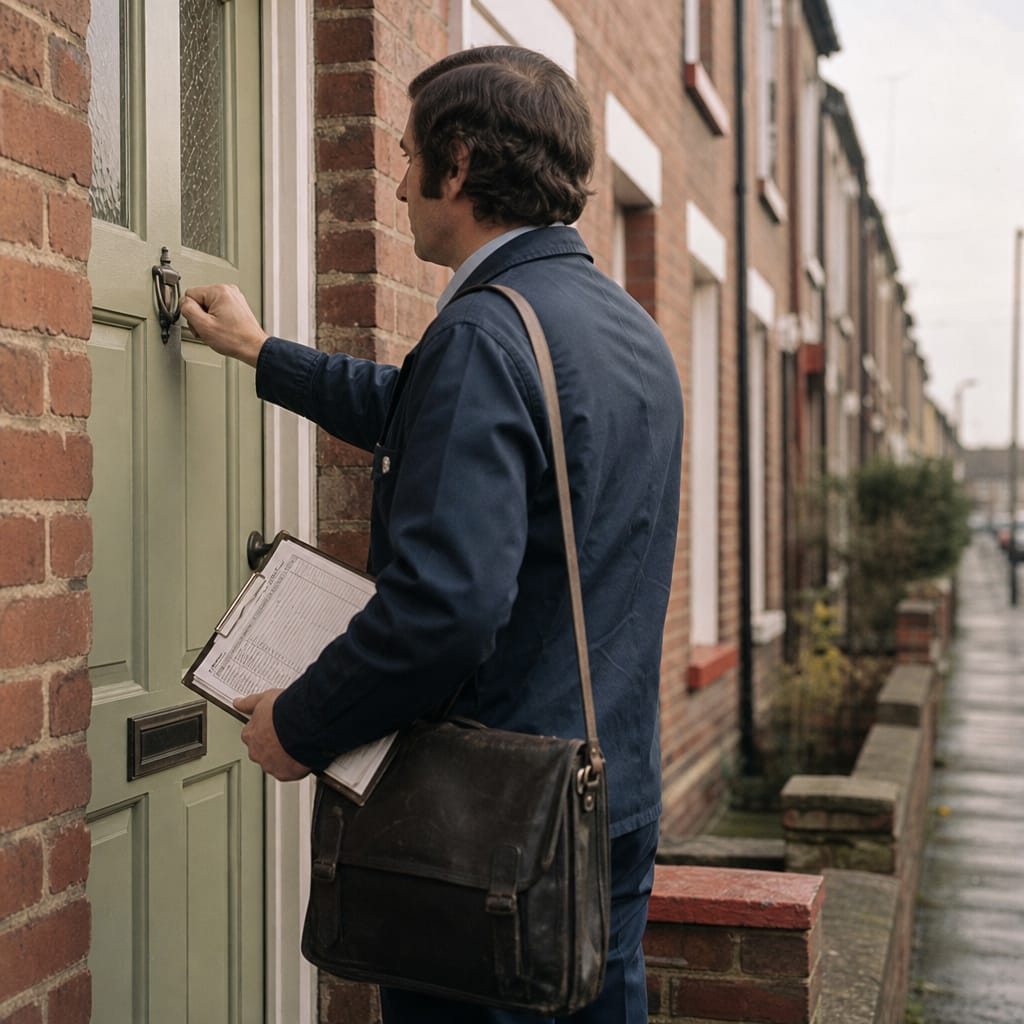
It’s 1974. The location is somewhere in Britain. An engineer from the Gas Board is making his way up your path. The man is equipped with a clipboard. He knows what model of appliance you have installed. This was logged at the time of installation. He also knows that the appliance has had 2 services in the last 5 years. These 2 visits to your home were logged in the depot ledger. The common fault of this particular model of appliance is something that the engineer has found on every street in the division. The engineer knocks on the door and even before you have opened it the engineer will have a pretty good idea of what he is going to find.
That wasn't remarkable. That was just Tuesday.
A Maintenance Relationship Nobody Named
The Gas Board, twelve regional boards unified under the British Gas Council, was described as a fuel supplier, not a maintenance organisation. Yet the maintenance operation it did run was, in practical terms, one of the largest domestic upkeep systems Britain has ever seen.
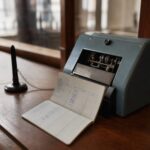
The Gas Board kept records of every home connected to the gas grid, not just as customers paying out quarterly to be supplied with fuel, but as properties with a history. Details of the appliances installed in each home, and the history of reported faults, were logged. Engineers for the corporation had developed knowledge of the housing stock on their patch. They knew the models of appliance that had been installed in rows of terraced houses of similar age and type, and the faults that recur on mid-1960s back boilers.
What the Ledger Actually Knew
These were not exciting documents – depot logs, installation sheets, service call cards. Collectively, across twelve regions, however, these records could be referred to as the ‘institutional memory’ of what had been installed in British homes, when it had been installed, and what problems had occurred with it.
Domestic maintenance is not just about mechanical skills – it’s also about knowledge, and what you know about a property before you arrive changes everything. The Gas Board’s engineers often had that knowledge before they had knocked on the door.
What Privatisation Actually Erased
The privatisation of British Gas in 1986 and the dissolving of the regional boards did more than just change share prices and increase competition amongst a growing number of companies. The single national voice, a single system running from a single set of regional depots with an accumulated institutional memory of the nation’s housing stock, was all broken up into smaller units, and eventually scattered.
However the accumulated knowledge of the maintenance of individual properties did not transfer in the same way as the engineers who transferred to work for the new regional companies. As the years went by British Gas itself was broken into further pieces. The number of servicing companies has increased to the extent that now there are dozens of independent companies and regional maintenance companies all servicing individual properties. There is more on this in Maintenance Speaks With a Regional Accent.
This is not a polemic against privatisation. It notes the loss of something which was never formally valued at the time, because nobody had bothered to name it. Maintenance once had a single national voice. The guy who comes to your door today almost certainly has no knowledge of the history of your property. The depot ledger where this knowledge was recorded has disappeared.
—
Were all twelve Gas Boards run the same way?
Not quite. Each of the boards, East Midlands Gas, North Thames Gas, Scottish Gas etc had their own depot structure and ways of keeping records. Some were better than others at keeping records. But they were all answerable to the British Gas Council which prescribed a national approach to matters such as installation and safety. The knowledge at least had a common language. After privatisation the knowledge had to deal with competing systems, none of which had to communicate with each other. This was a large difference from the regional variation within one system that there had been before.
What happened to the records when the boards were dissolved?
Most of them did not survive in any useful form. There was no legal requirement for domestic service histories to be preserved as the supply of gas was privatised. The service histories, contained in service cards, depot logs and installation sheets, were treated as no more than operational paperwork and not worth archiving. The National Gas Archive in Warwick contains some corporate and technical history but none of the property-level service history that would have been of use to those who inherited the houses.
Can you find out what gas work was done before you bought your house?
Work done from 2009 onwards – Yes. The work is recorded on the Gas Safe Register (which replaced CORGI that year) database for work done by registered Gas Safe engineers, and a property history can be requested. Work done prior to 2009 and unregistered work – essentially no. The history of what a boiler has been subjected to since new is, in many cases, unknowable. It is a reasonable argument for recording work for future reference even if no one asks you to.
Did any country manage to keep something like the Gas Board's maintenance tracking going?
Some did, roughly. A number of regional German suppliers keep a closer relation between gas supply and appliance service. In Germany, this is partly driven by building regulations that require periodic registered service of heating appliances rather than leaving it to the householder's discretion. Some of this institutional knowledge of what heating plant is installed in a house is still held by the gas supplier in places. However, in Britain this has disappeared quite thoroughly and, for the most part, without comment. It has gone.
FAQ
Were all twelve Gas Boards run the same way?
No, each of the regional boards (such as East Midlands Gas, North Thames Gas and Scottish Gas) had its own depots and ways of keeping records. Some were better than others at keeping records. They were all answerable to the British Gas Council which set a national approach to installation and safety and thus knowledge had a common language.
What happened to Gas Board service records when the boards were dissolved?
The majority have not survived in any useful form. Domestic service histories were not legally required to be kept following gas privatisation. Service cards, depot logs and installation sheets were deemed to be operational notes. The National Gas Archive at Warwick is home to some of British Gas’s corporate and technical history but none of it is property-specific or relates to individual services.
Can you find out what gas work was done before you bought your house?
Work carried out by registered engineers from 2009 onwards is recorded on the Gas Safe Register database, which replaced CORGI that year. Therefore, a property history can be requested. Work carried out prior to 2009 and work undertaken by unregistered operatives is, however, essentially unknowable and it is recommended that householders retain evidence of work that has been carried out.
Did any country keep something like the Gas Board’s maintenance tracking?
There are some regional German suppliers who maintain closer relationships between gas suppliers and people who service gas appliances. This is partly because building regulations require periodic registered service work to be carried out on heating appliances, rather than leaving it to the householder. However, this sort of knowledge sharing has largely vanished in Britain.